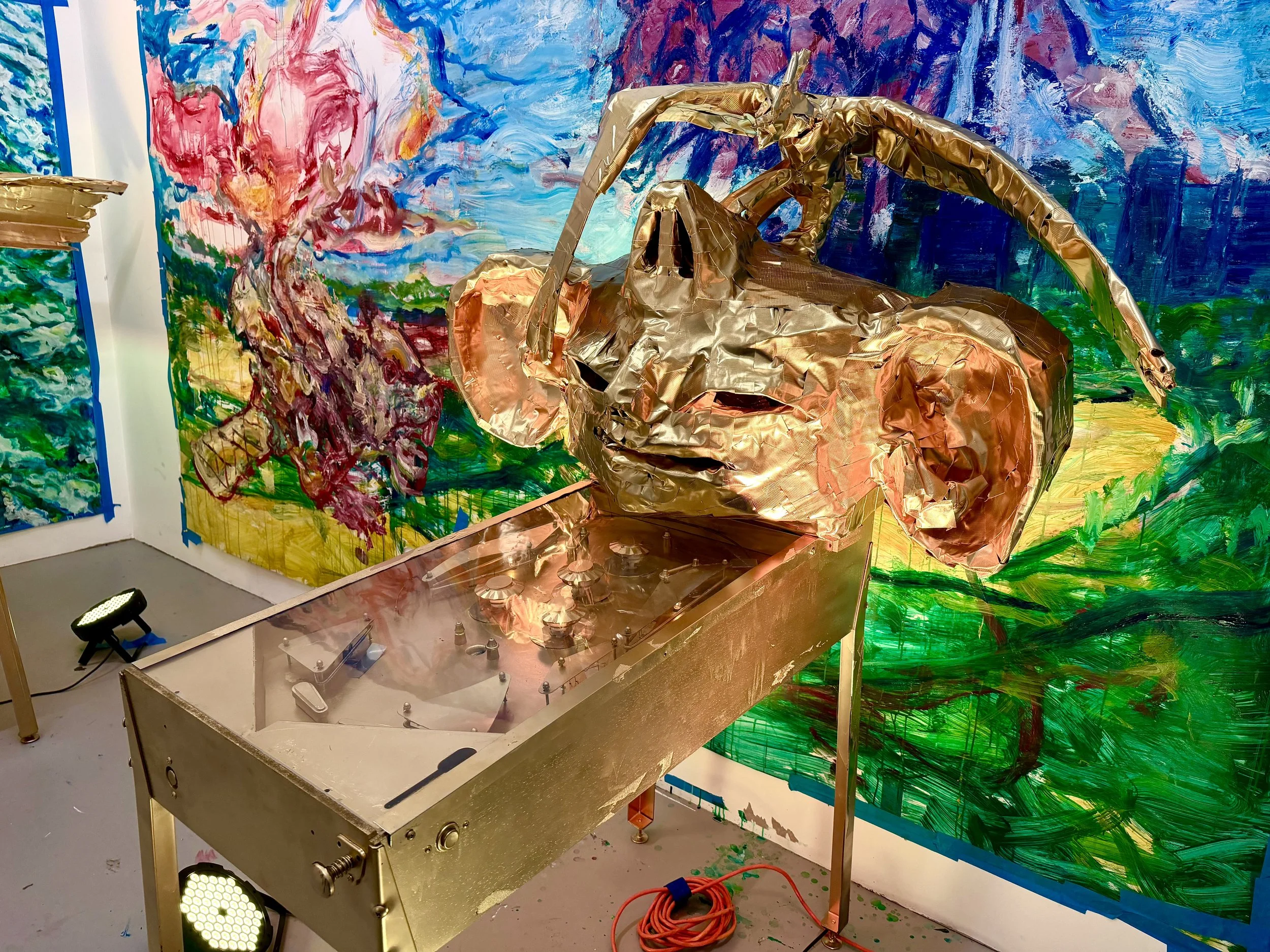
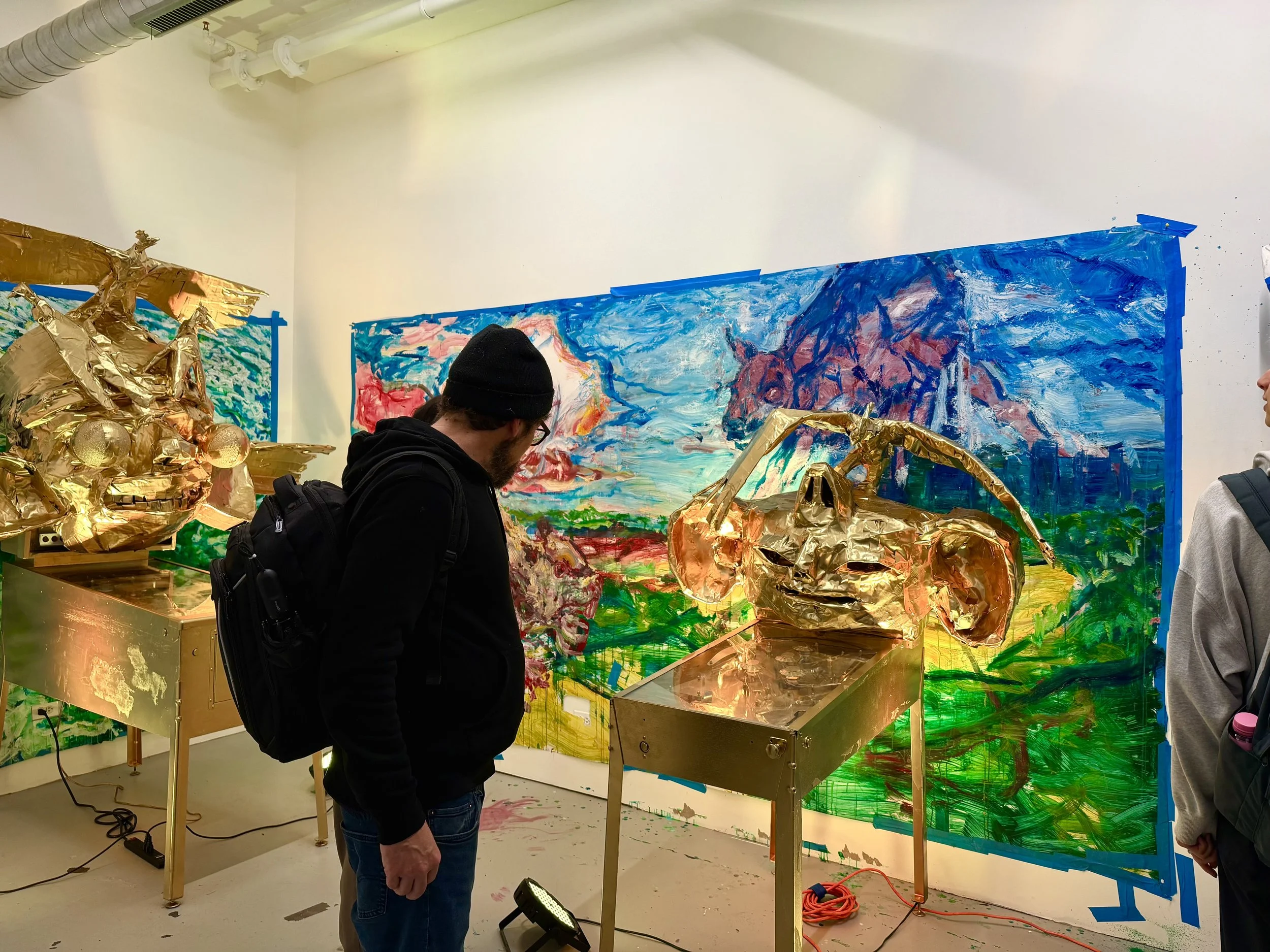
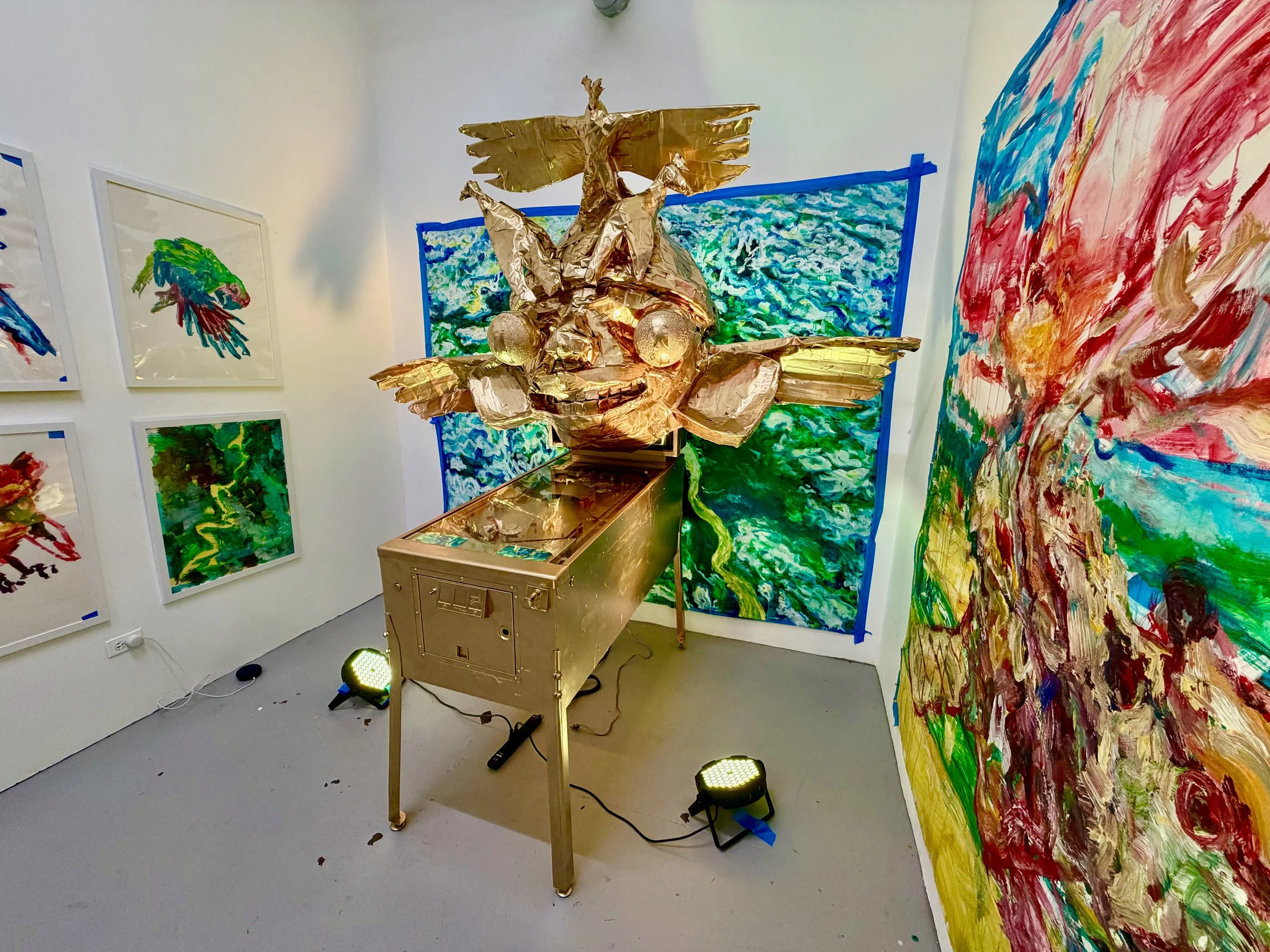
Push-On: The prophets of the Extra life - 2026
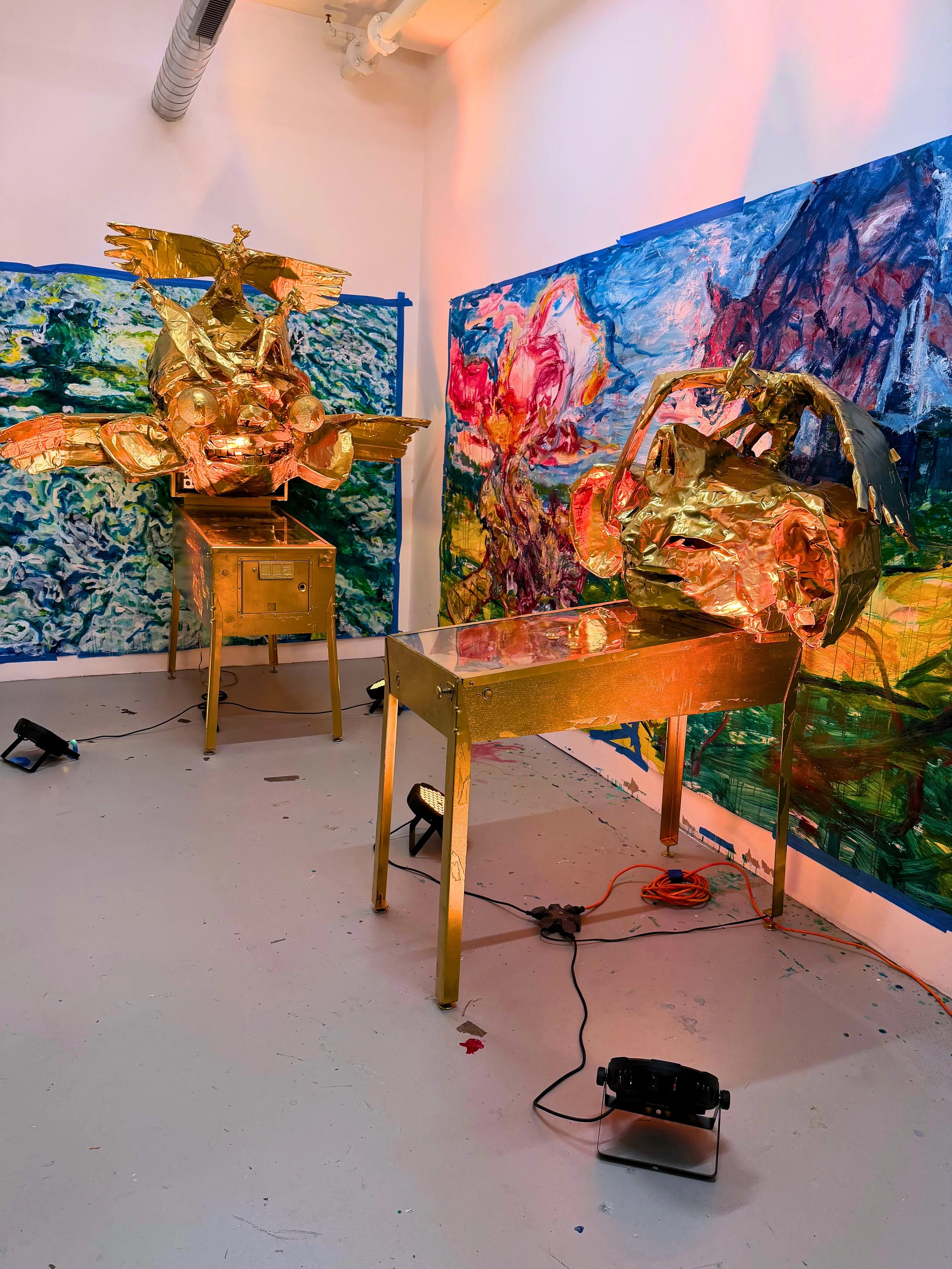
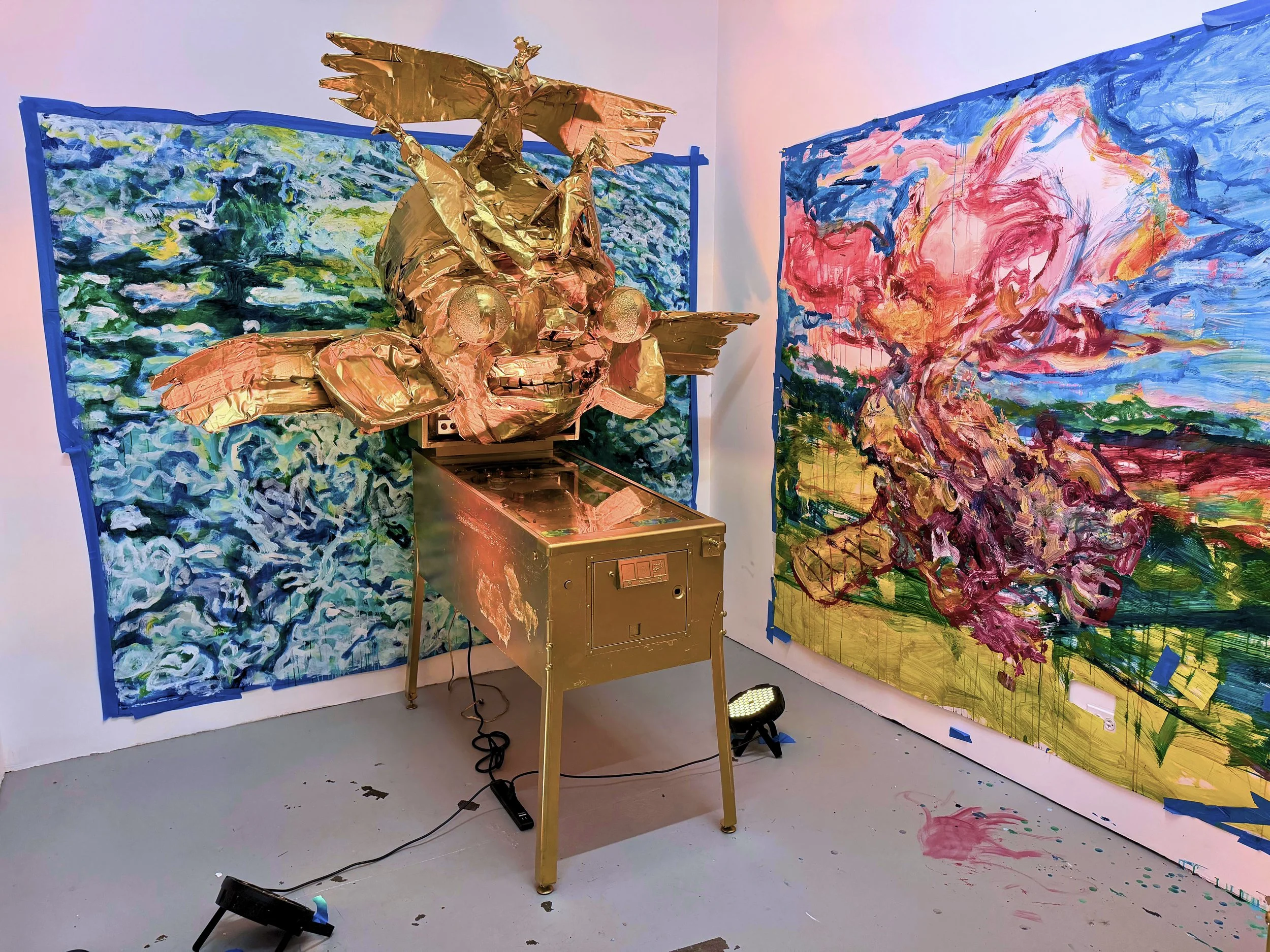
modified pinball machines, cardboard, duct tape, gold paint, metal, screws, elastics, wire.
Exhibited at Mana Contemporary - Spring Open Studios
Opening Summer 2026 at The Flip: Chicago’s Playable Pinball Museum
This project is possible thanks to the 3Arts Chicago and Andy Warhol Foundation Ignite Fund awarded in 2025.
Assistant Artist include Mike Triplett, Yeison Pérez, Benji Rivera, and Wendy Madrigal.
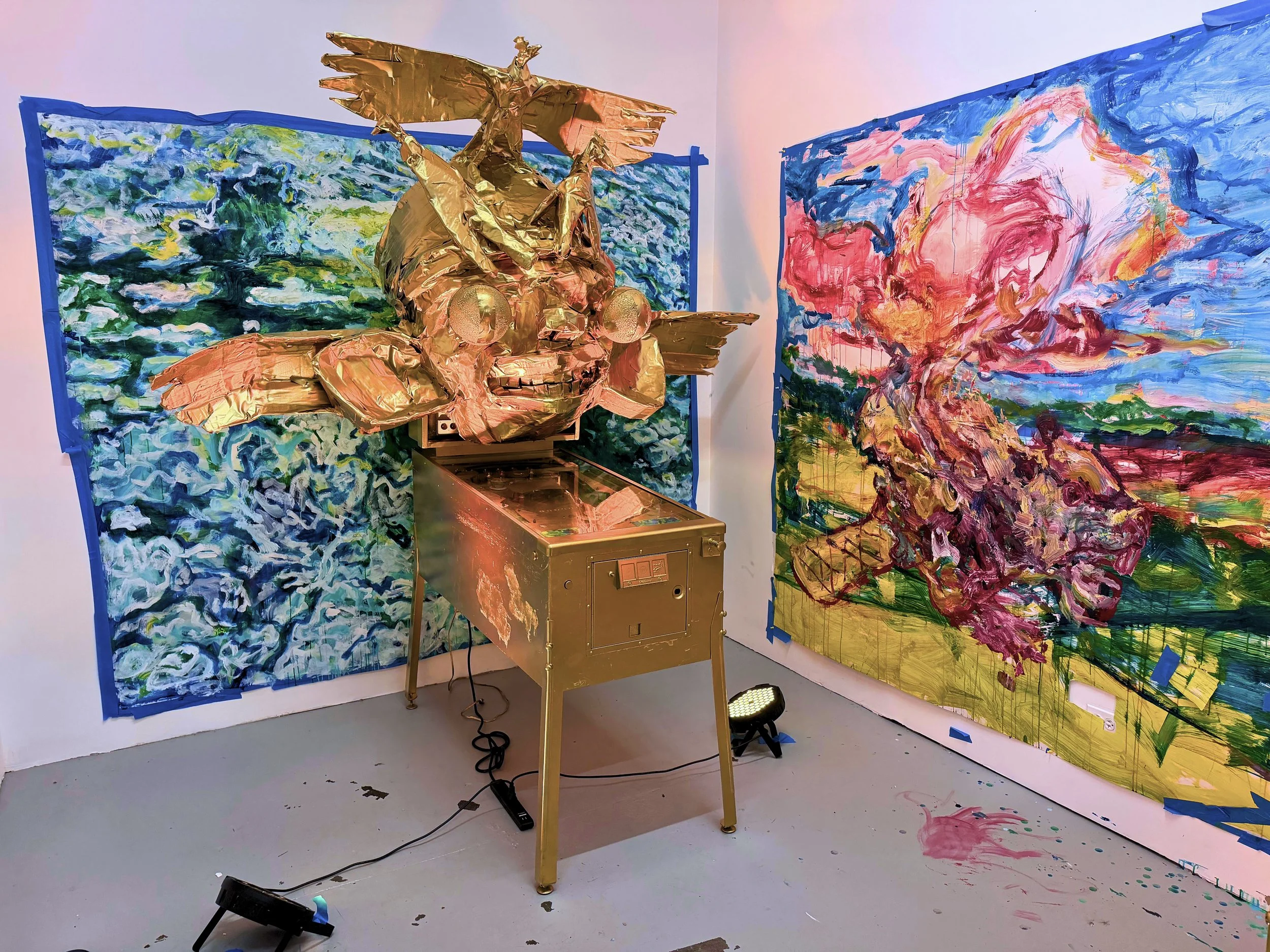
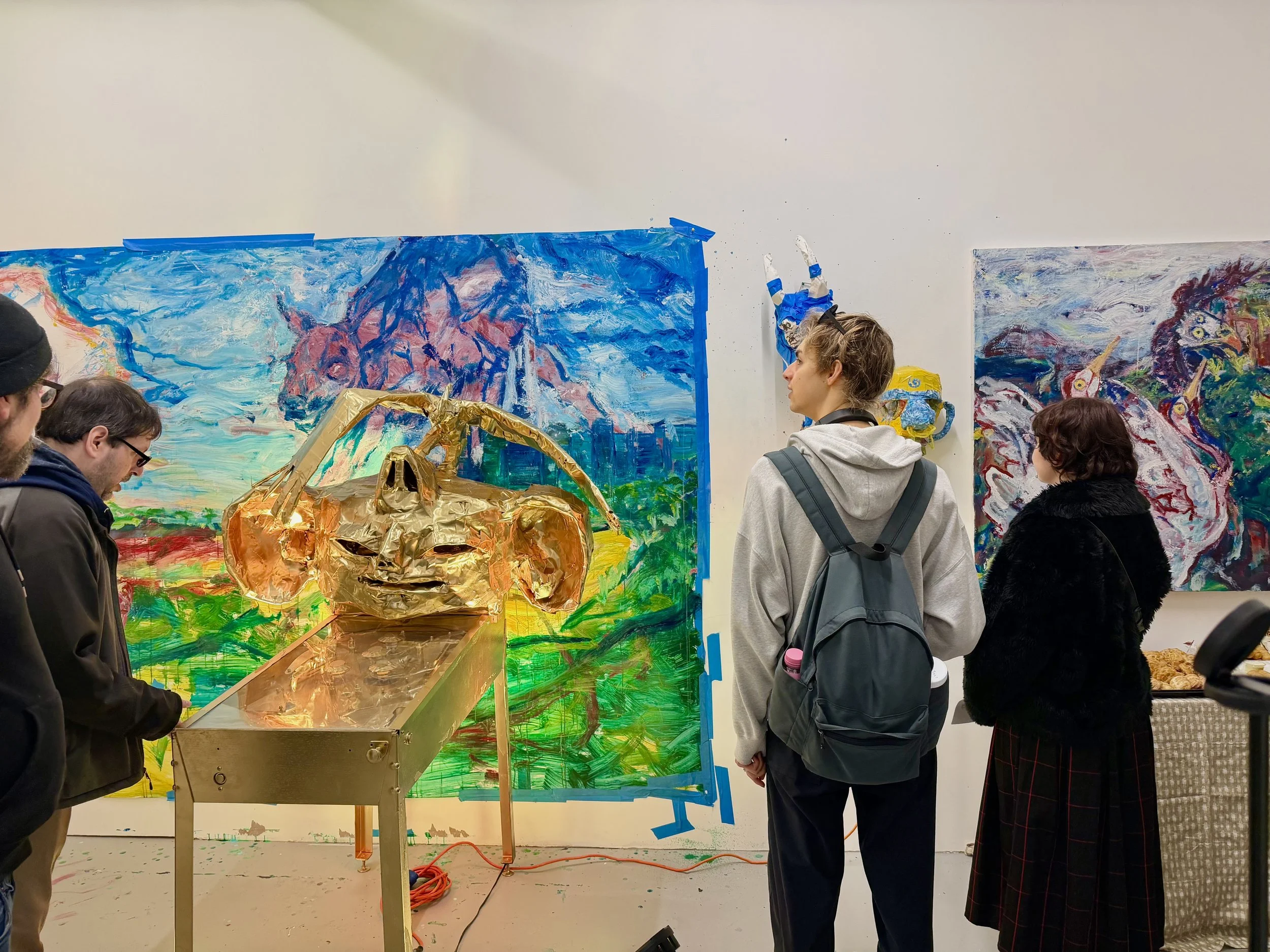
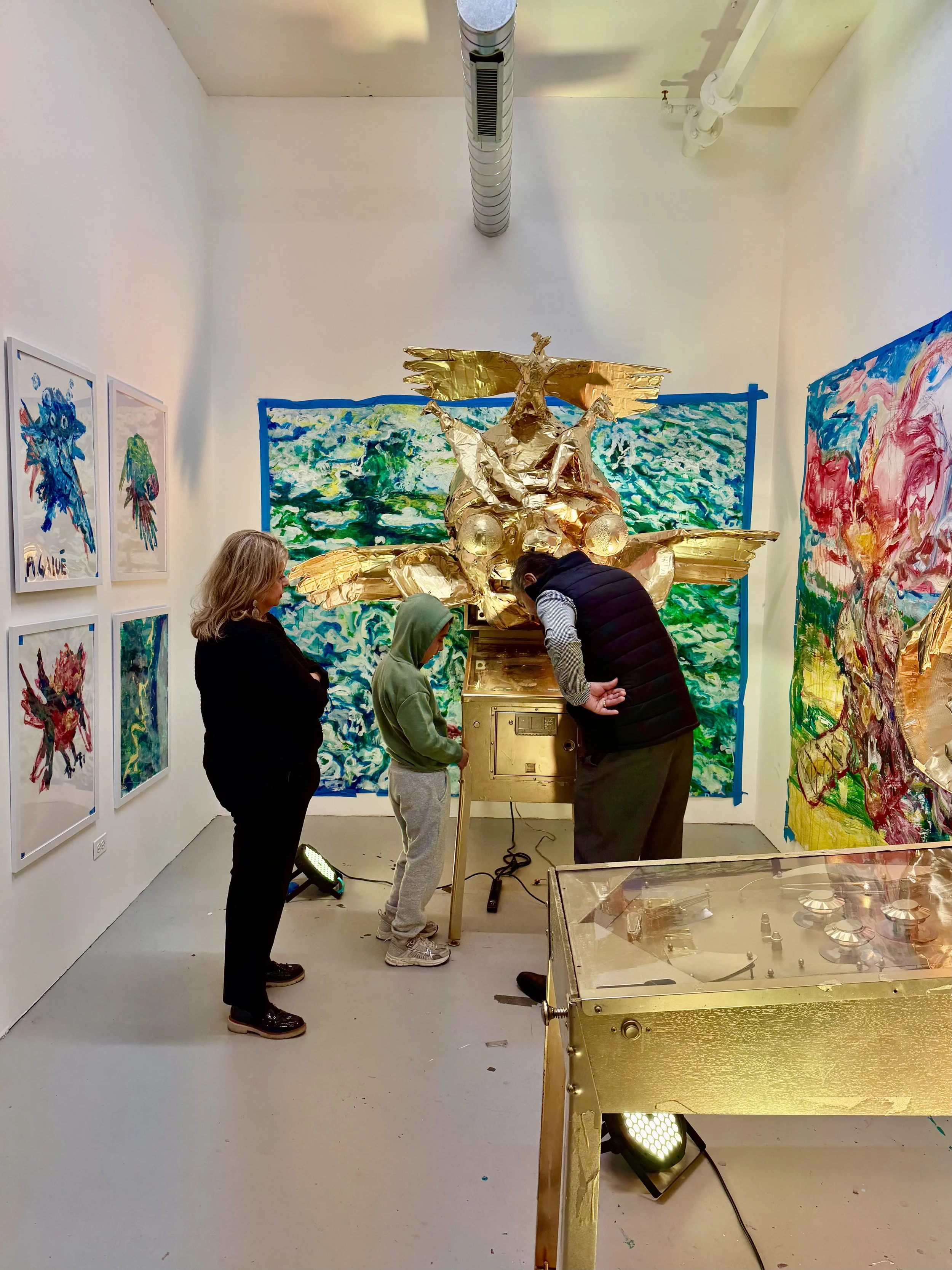
Push-on installed at Mana Contemporary Chicago.
Art and games strongly shape how we perceive, behave, and relate to one another, beyond conscious awareness.
Push-On: The Prophet of the Extra Life brings visual and mythological elements from ancient American cultures into contemporary gaming environments like arcades, cultural institutions, and community spaces, using play as an accessible entry point to ancestral knowledge systems.
Grounded in research on Andean, Amazonian, Chibcha (Tairona), and Timoto-Cuica traditions, the project activates continental poetics within everyday public life. The large-scale sculptures reimagine deities created by Ancestral Andean communities specifically the Timotocuica of Venezuela’s Cordillera de Mérida and the Tairona of Colombia’s Cordillera de Santa Marta (900–1300 CE) before colonization.
Myths are born from taking human problems to the terrains of the gods.
Puh-On reminds us of the opportunities to keep going in a world that moves us at random while we try to keep in control.. No matter how many times the steel ball falls, the plunger will gives us the force to start again.
These mythic figures, born from daily realities projected onto stronger natural forces, are hand-sculpted using cardboard, tape, and metallic gold paint mounted on a modified Williams pinball machines.
The Pinball Games are in it self the result of French table games modified with electromechanical flippers and bumpers in 1940-1950s Chicago by Gottlieb Manufacturing to fit the needs of a post-industrial society that needed affordable entertainment systems after the war.
For Chicago’s Venezuelan diaspora of around 55,000 expatriates welcomed by the city’s sanctuary policies since 2022 the work carries cosmovisions of condors, dantas (tapirs), snakes, and macaws across borders.
Identities forged in exile expanding languages and knowledge, transforming architectural signs and built urban forms into living landscapes. Rather than didactic instruction, the installation invites participants to reconsider their relationship to their selves, land, city, and environment through immersive, interactive play fostering ecological awareness and a more harmonious society.