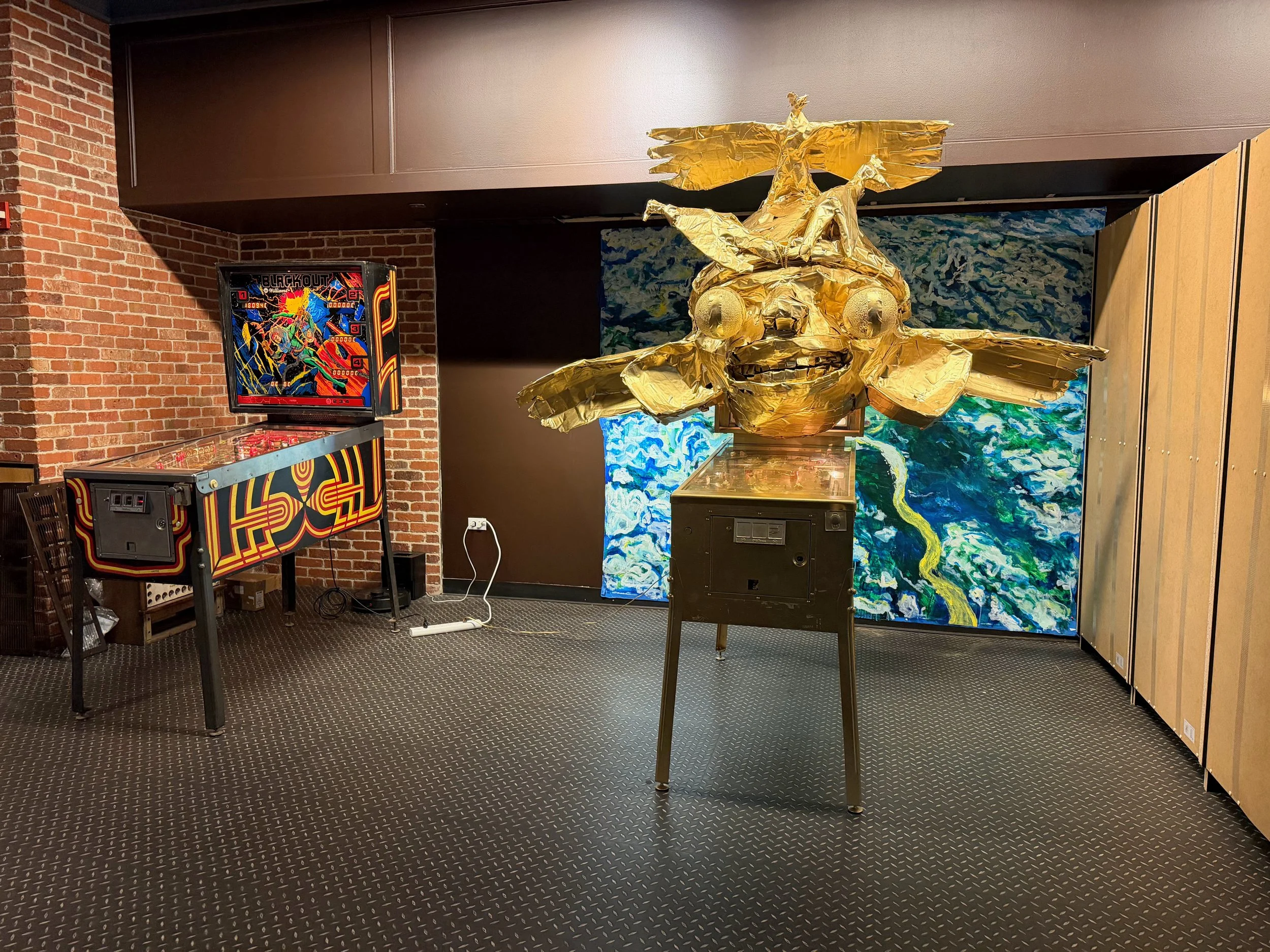
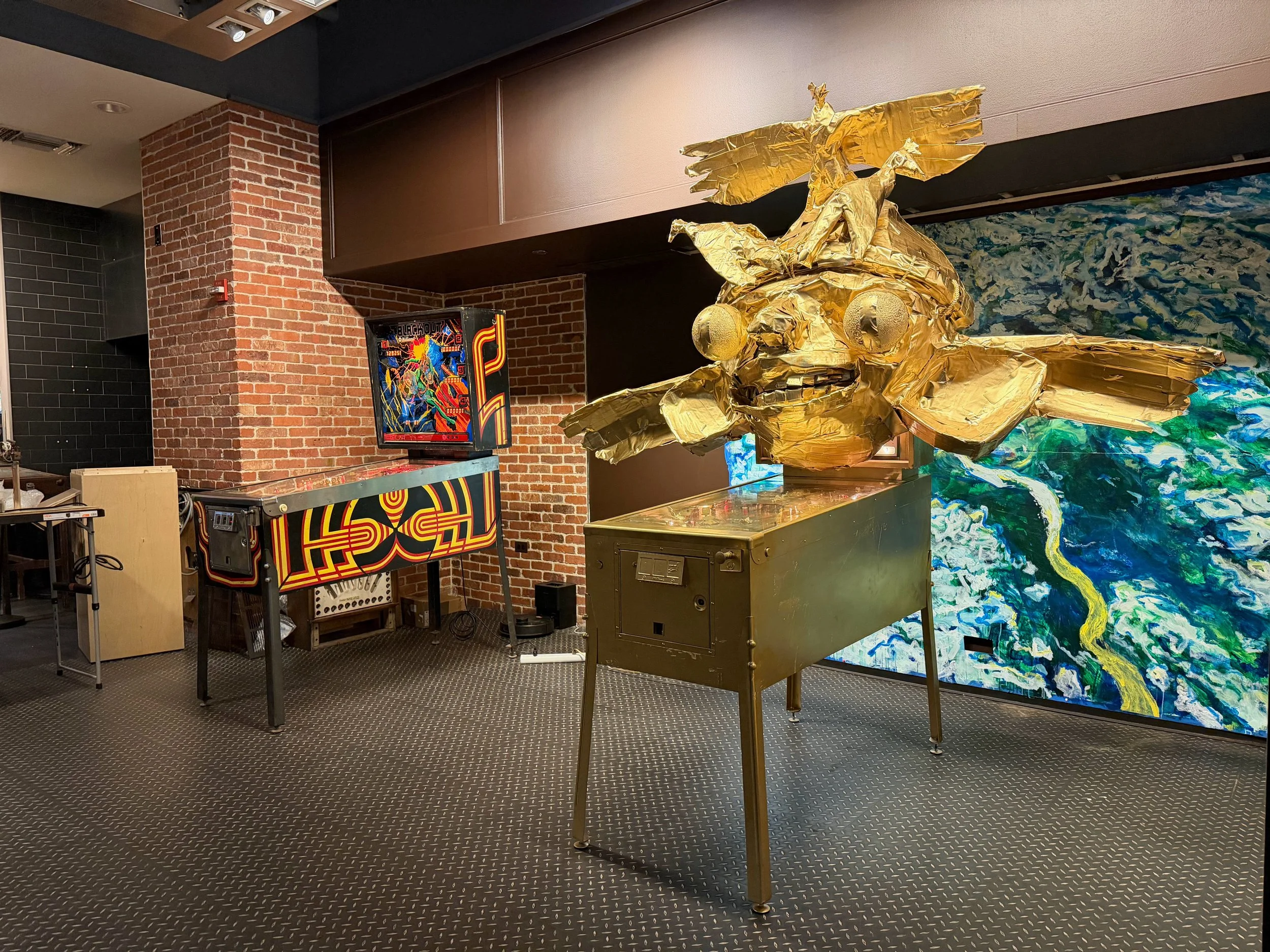
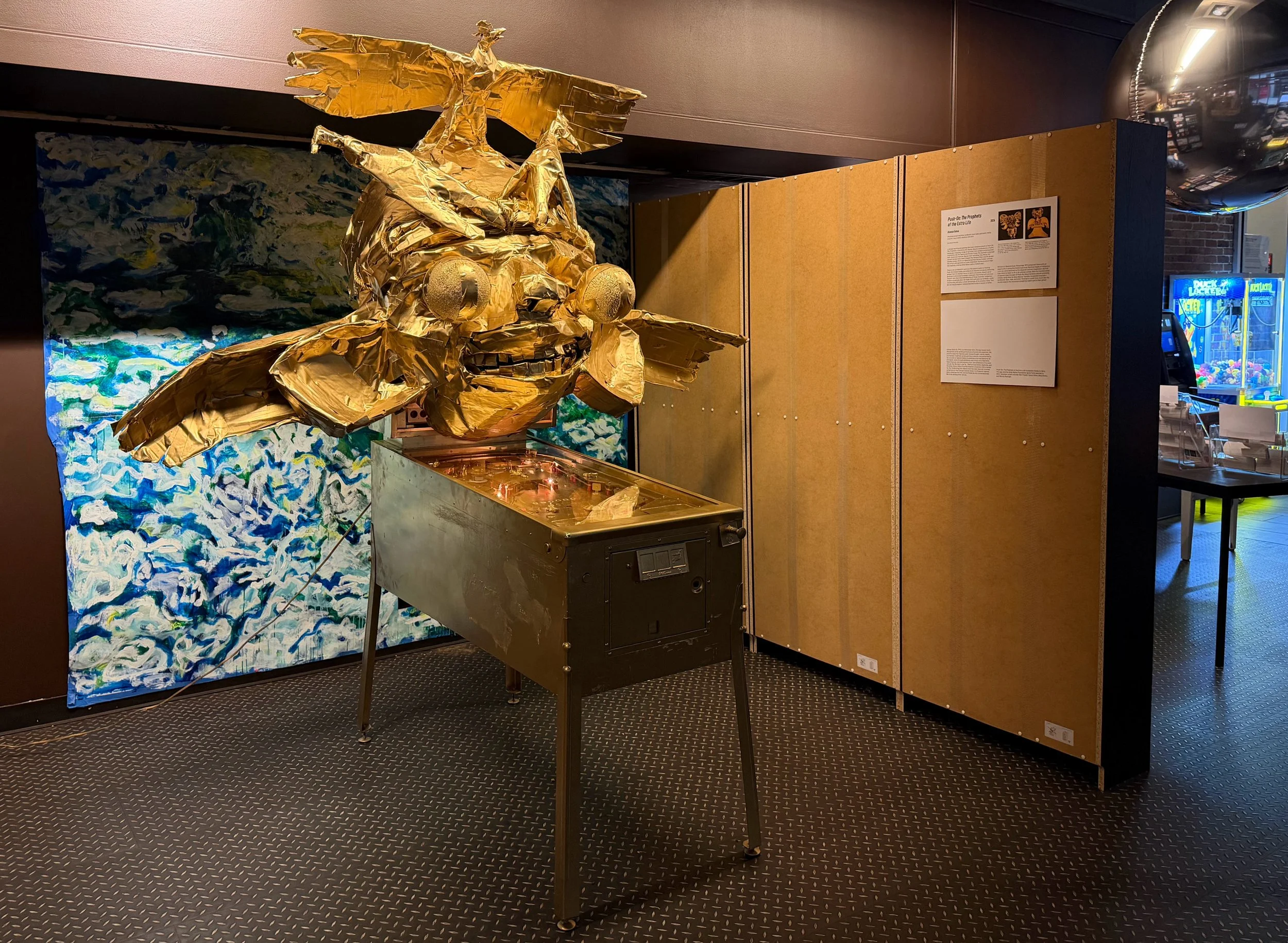
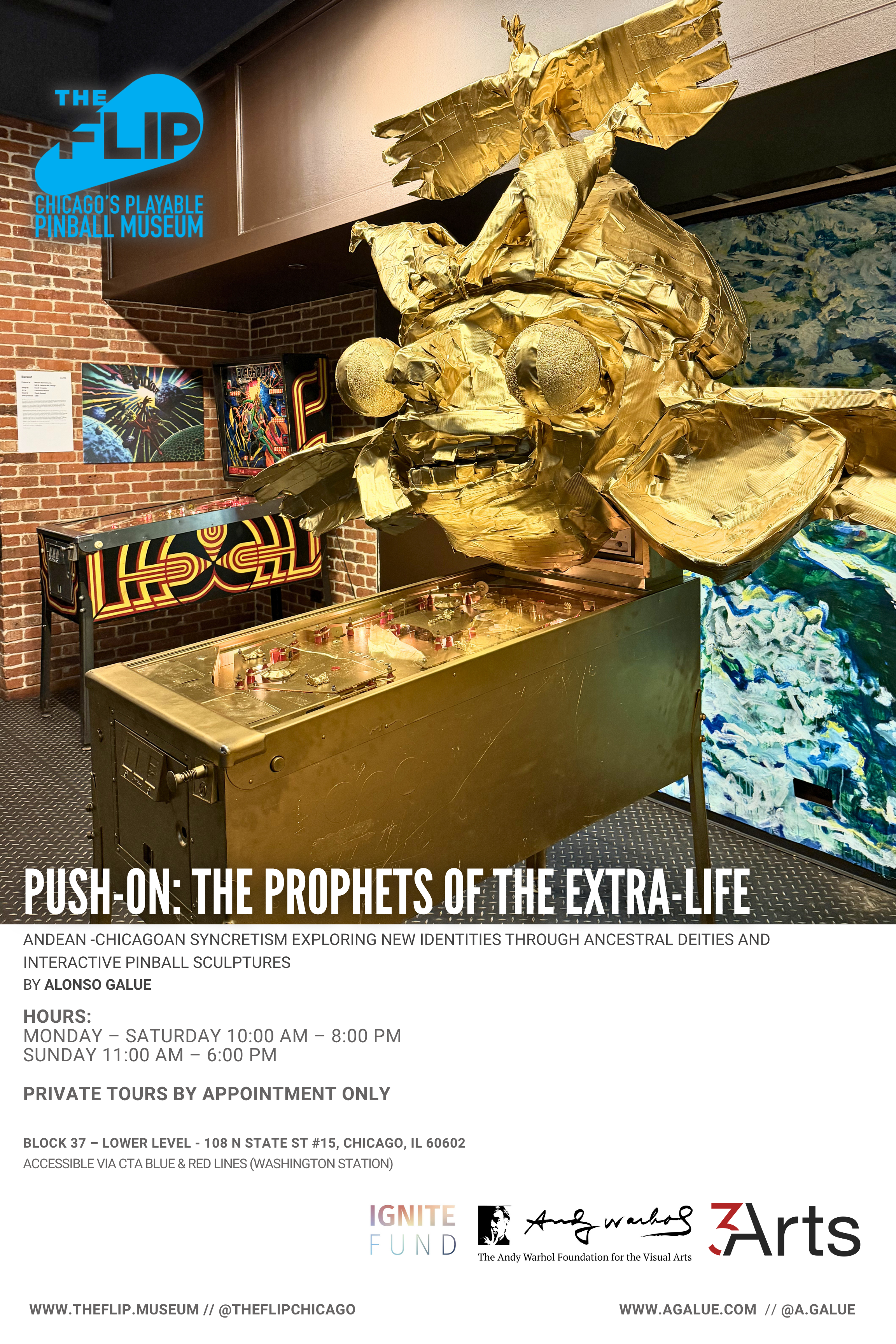
Push-On: The prophets of the Extra life - 2026
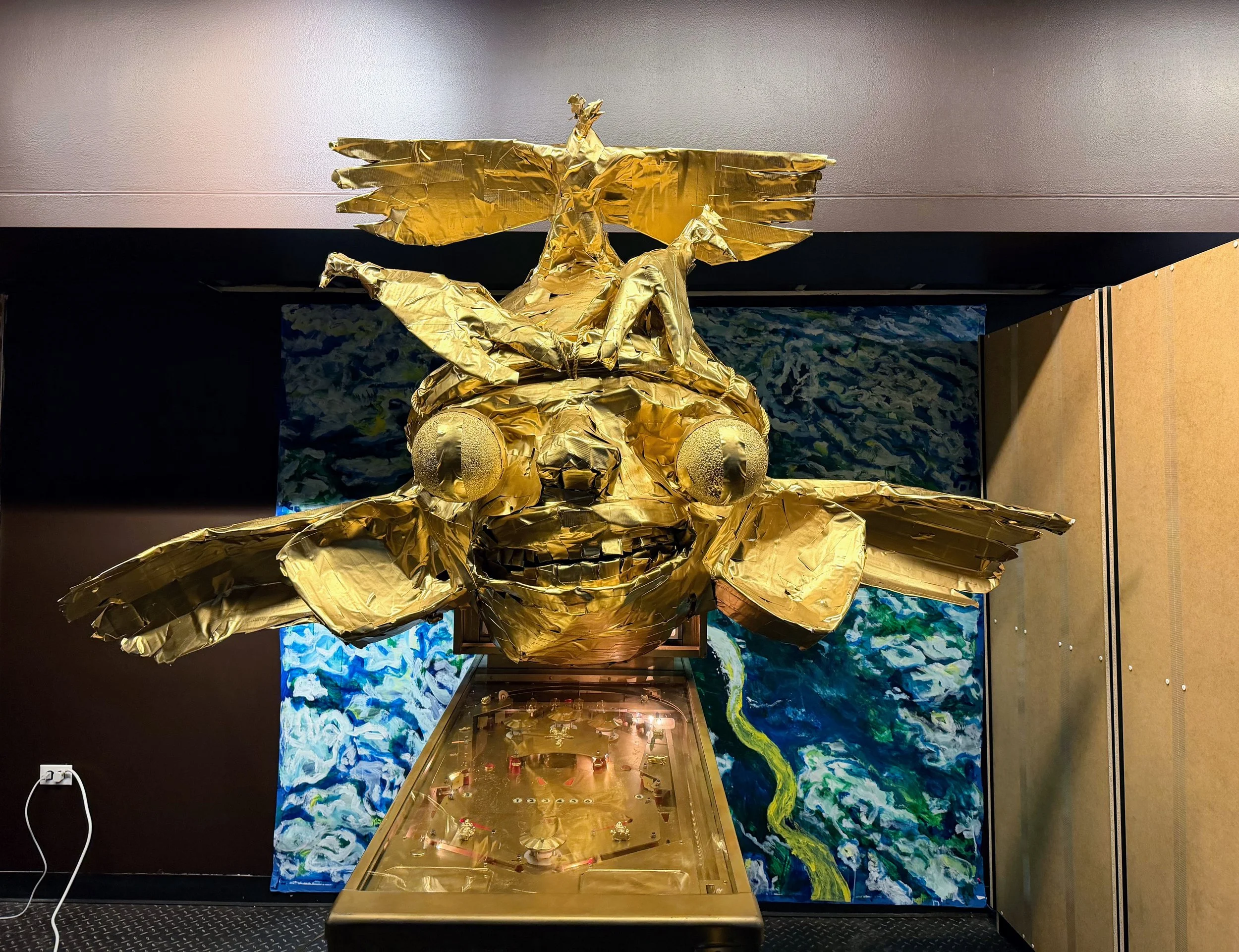
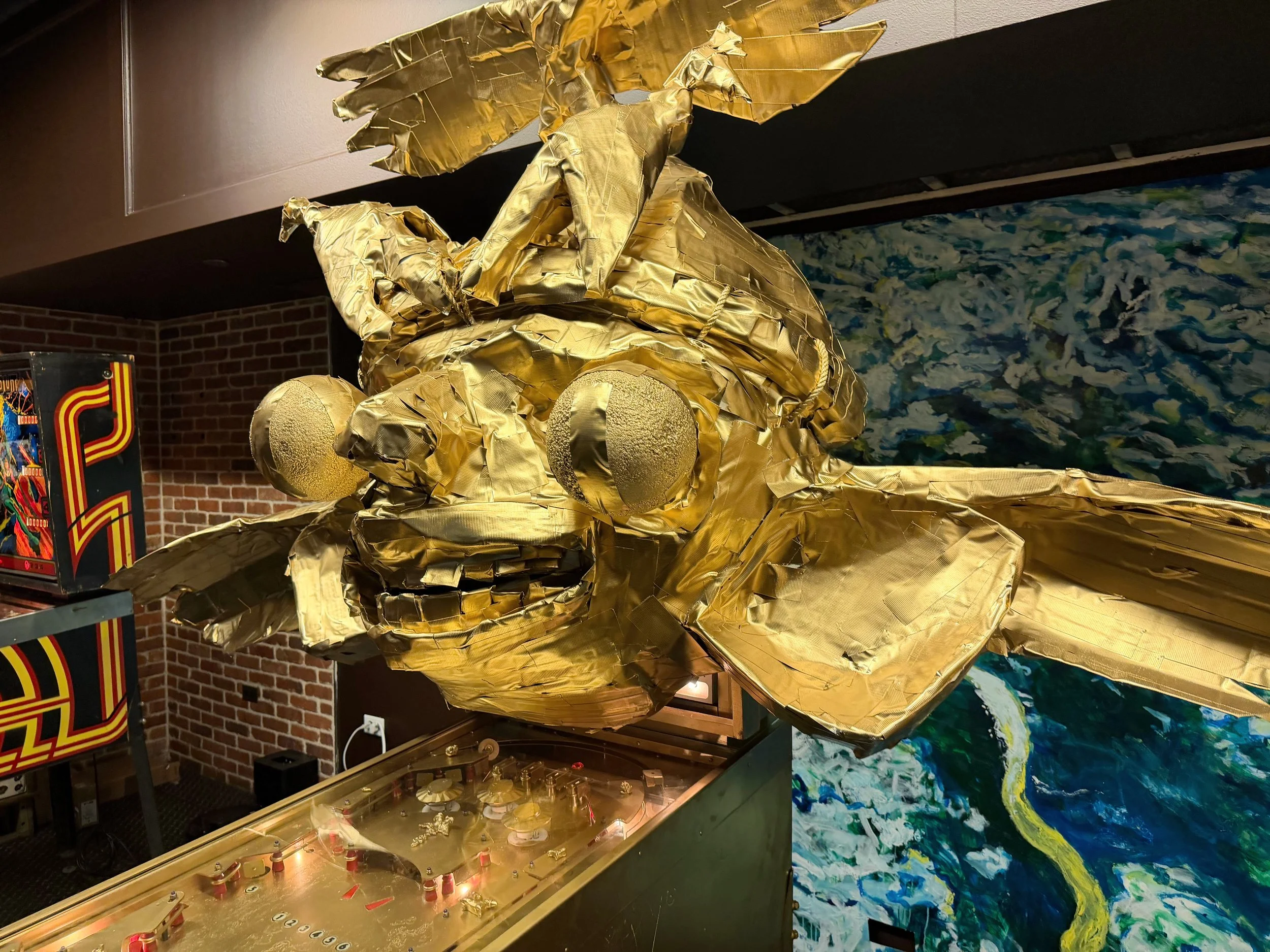
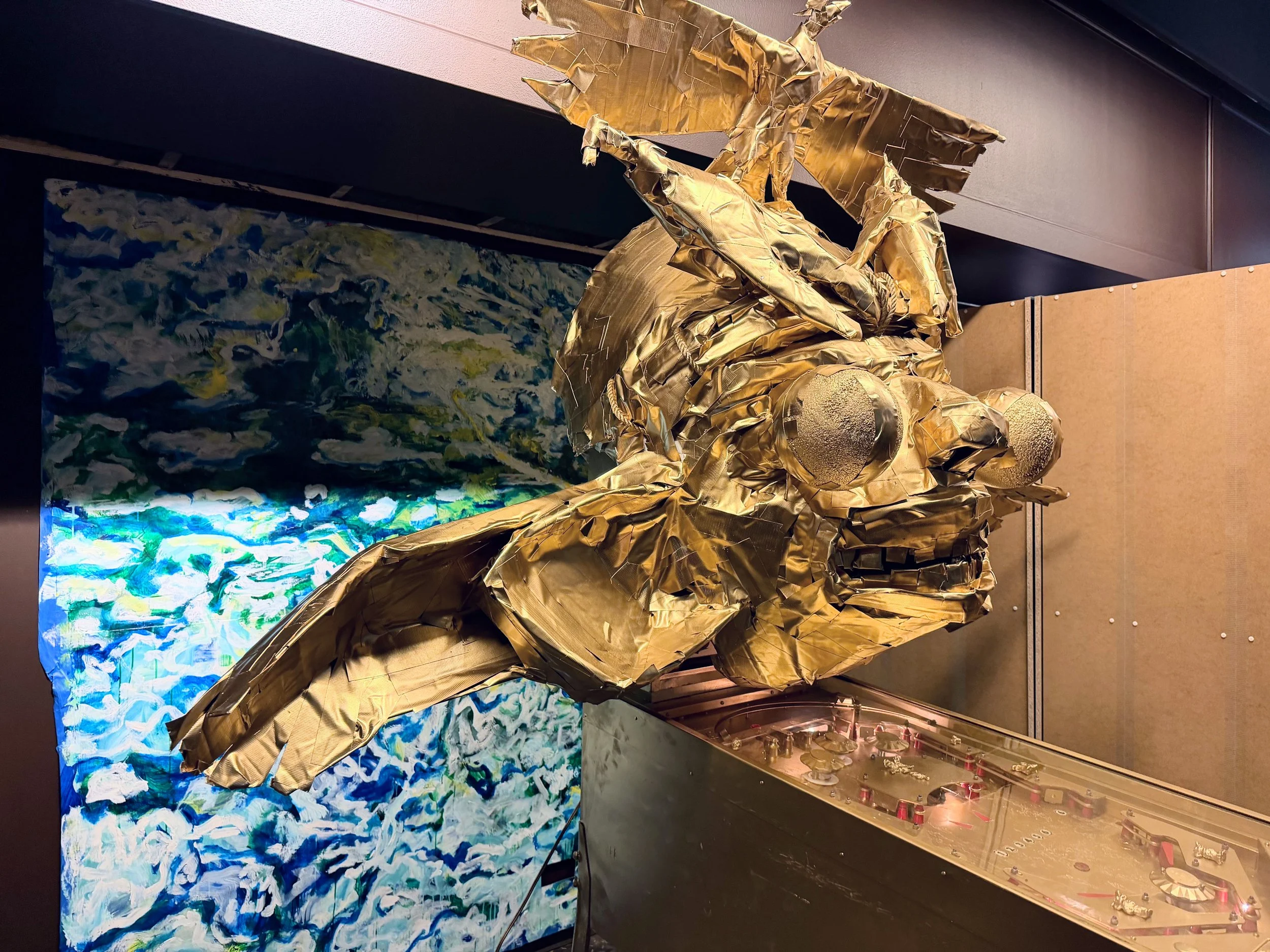
modified pinball machines, cardboard, duct tape, gold paint, metal, screws, elastics, wire.
Currently Exhibited at The Flip - The Flip: Chicago’s Playable Pinball Museum
This project is possible thanks to the 3Arts Chicago and Andy Warhol Foundation Ignite Fund awarded in 2025.
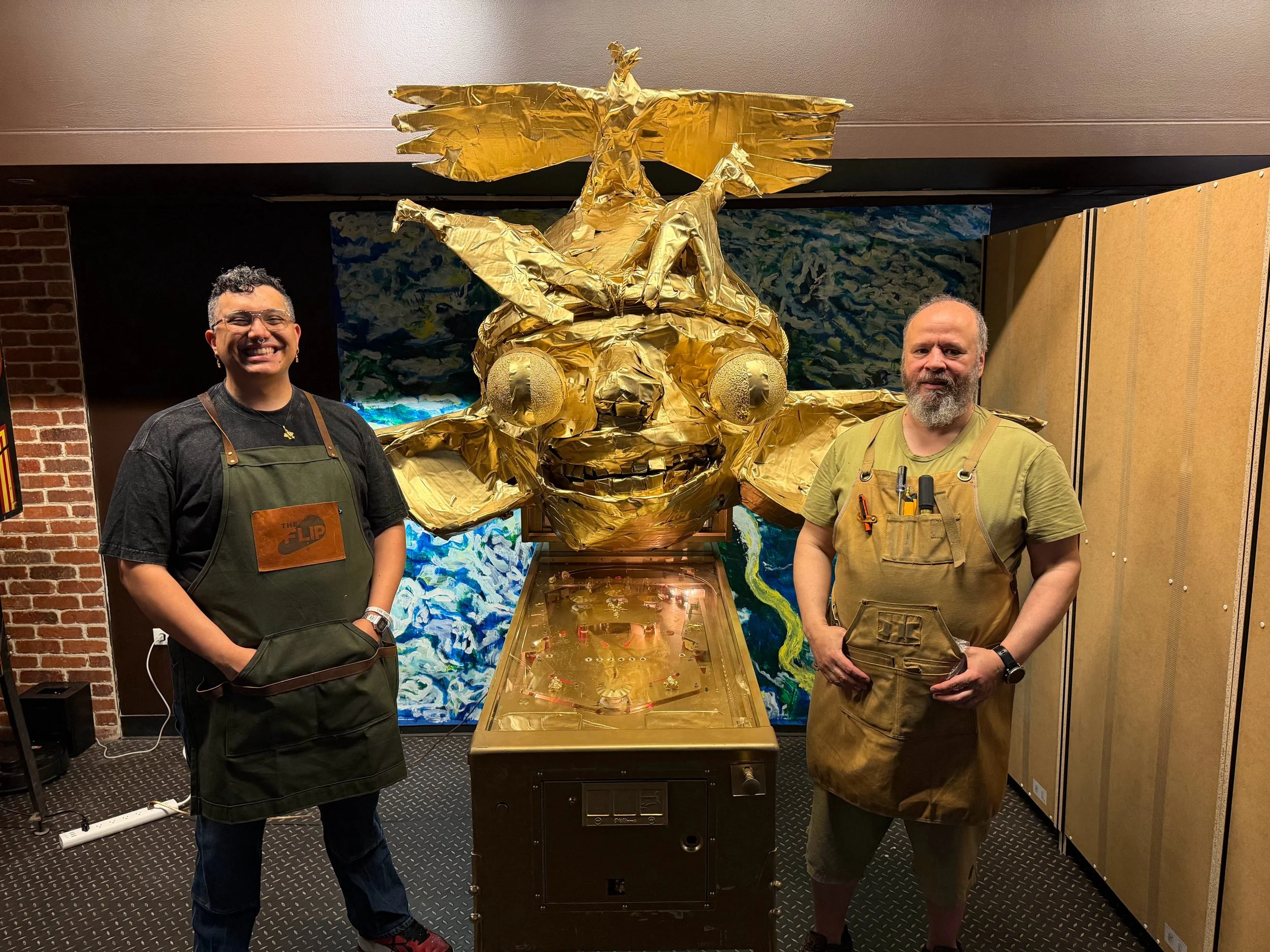
Assistant Artist include Mike Triplett, Yeison Pérez, Benji Rivera, Chris Wellems, and Wendy Madrigal.
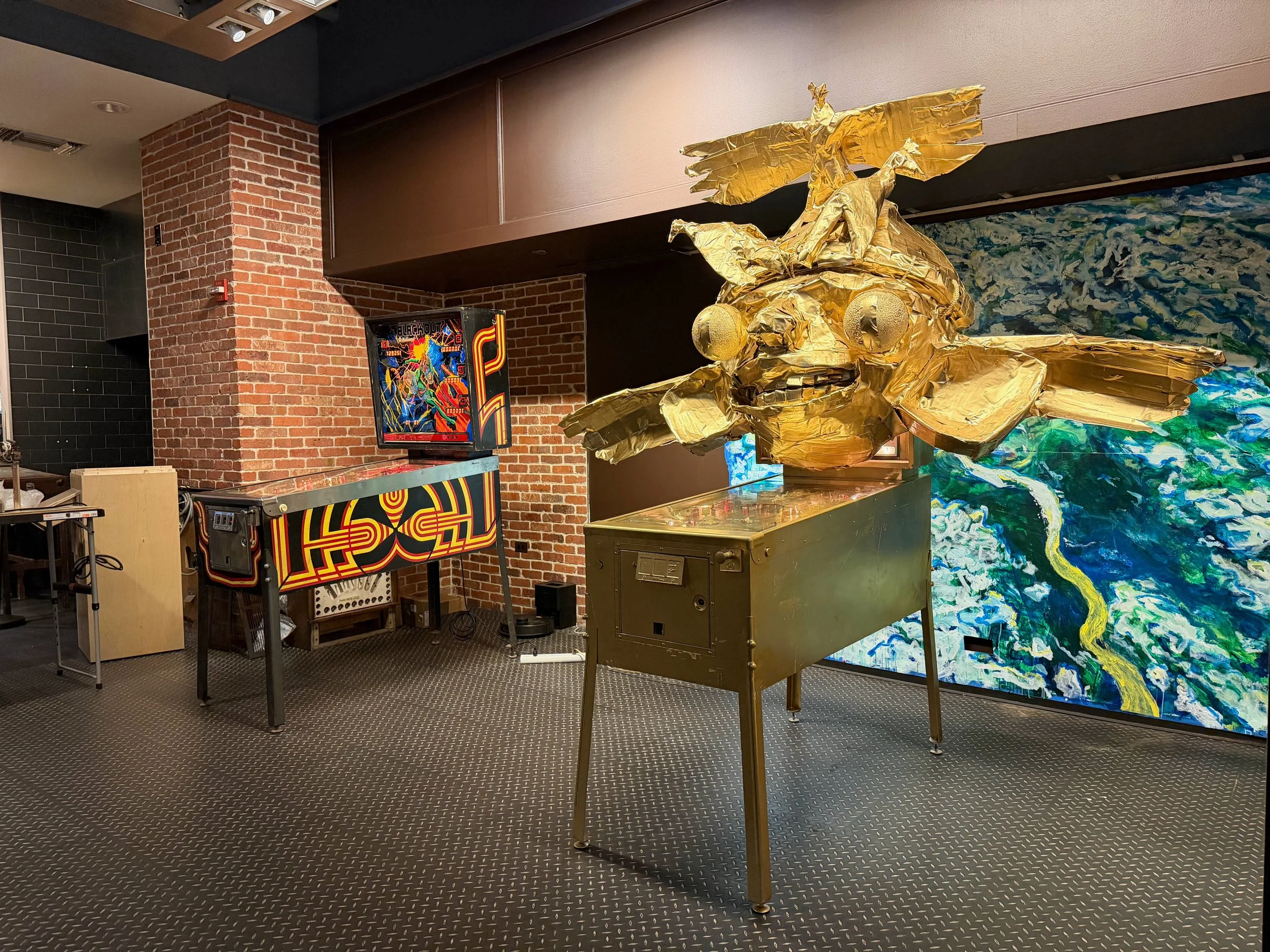
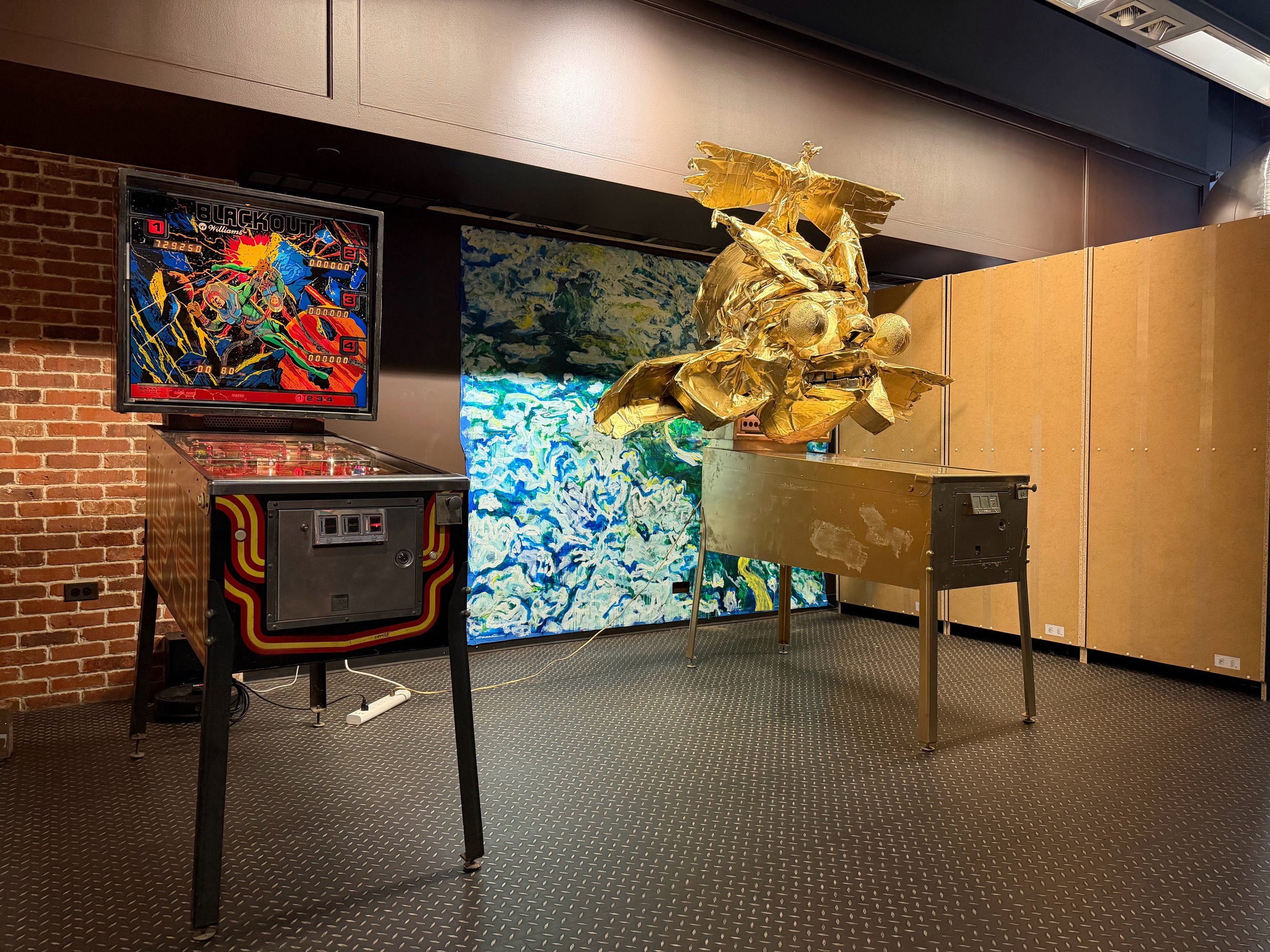
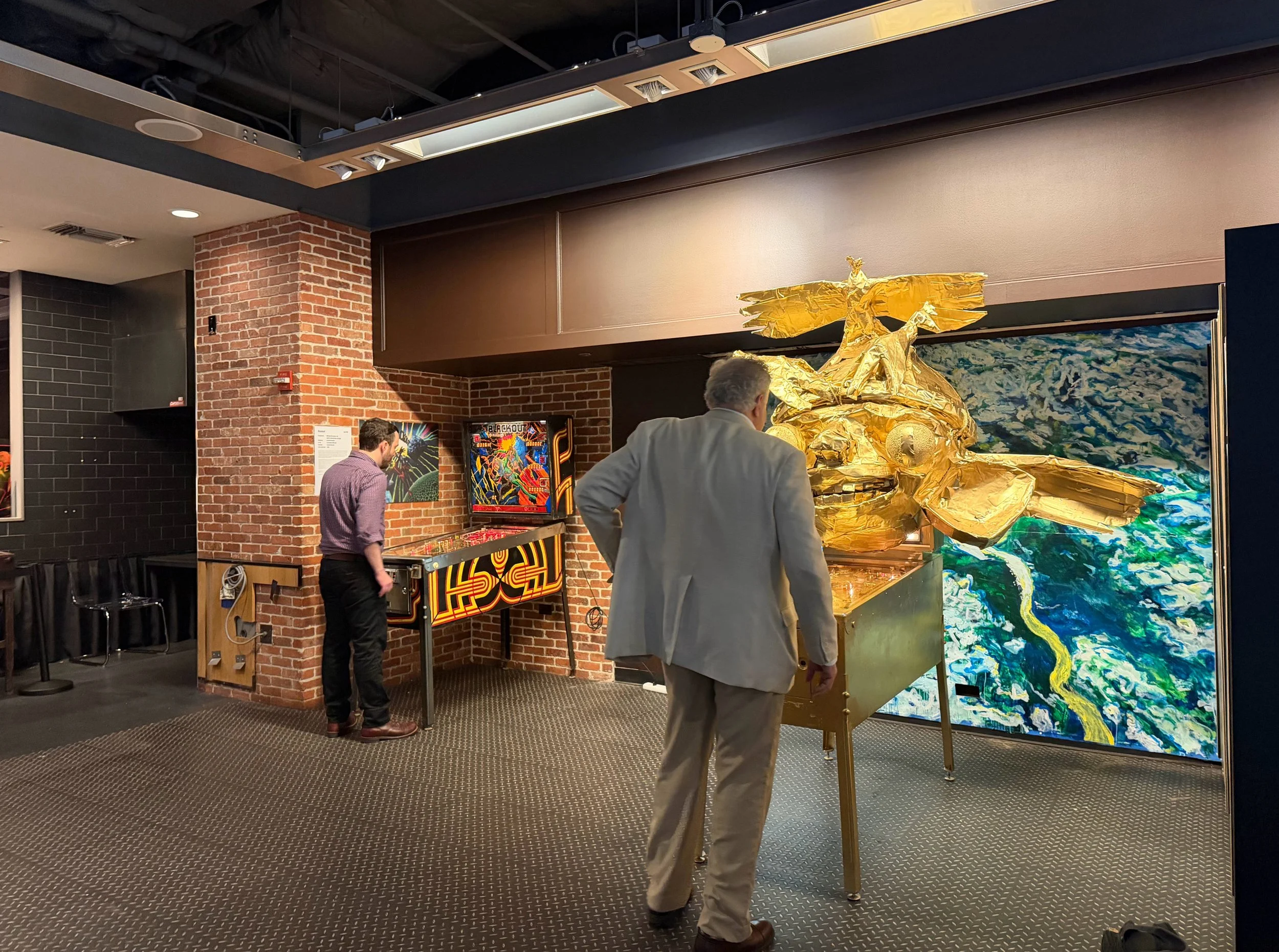
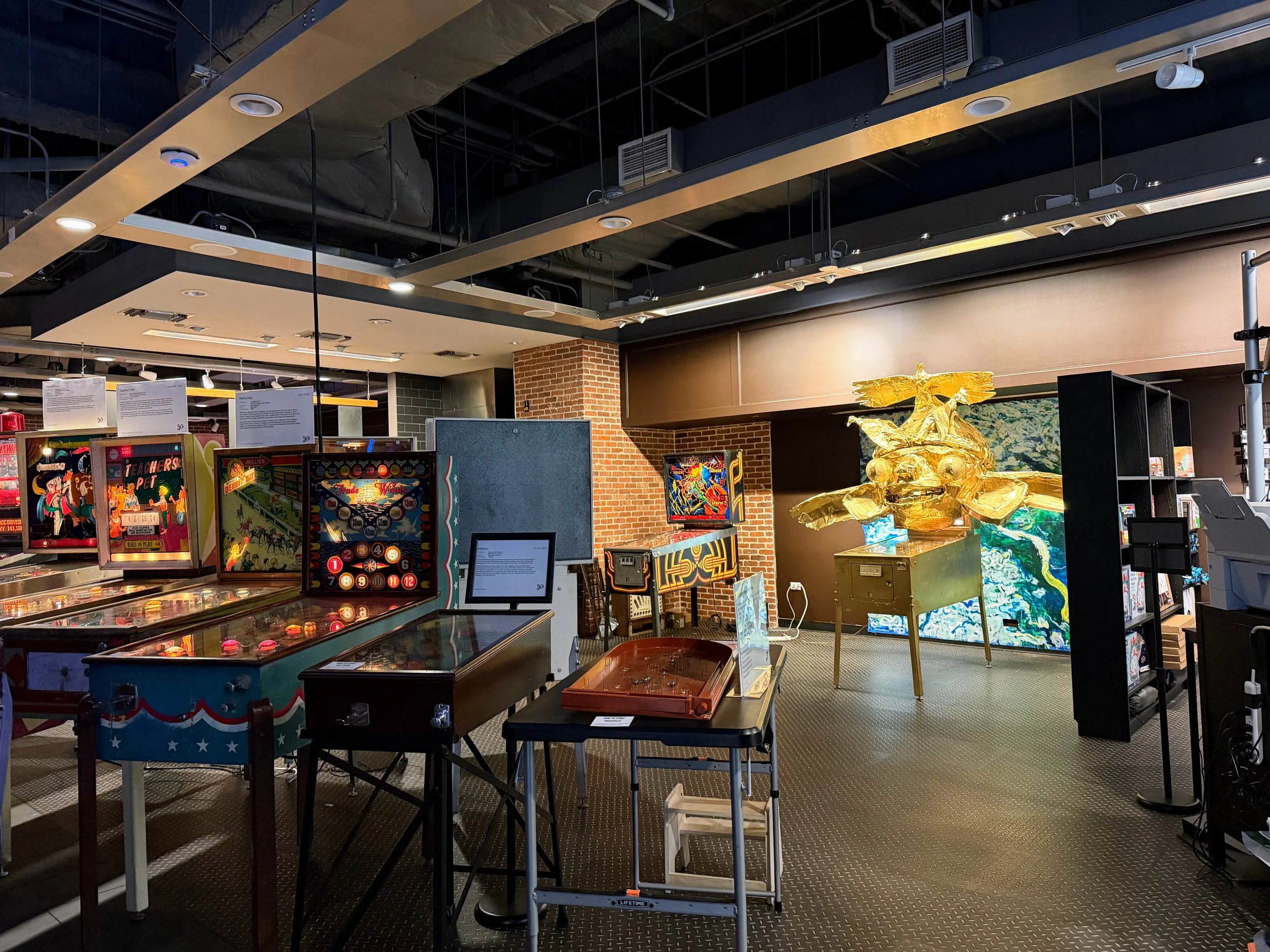
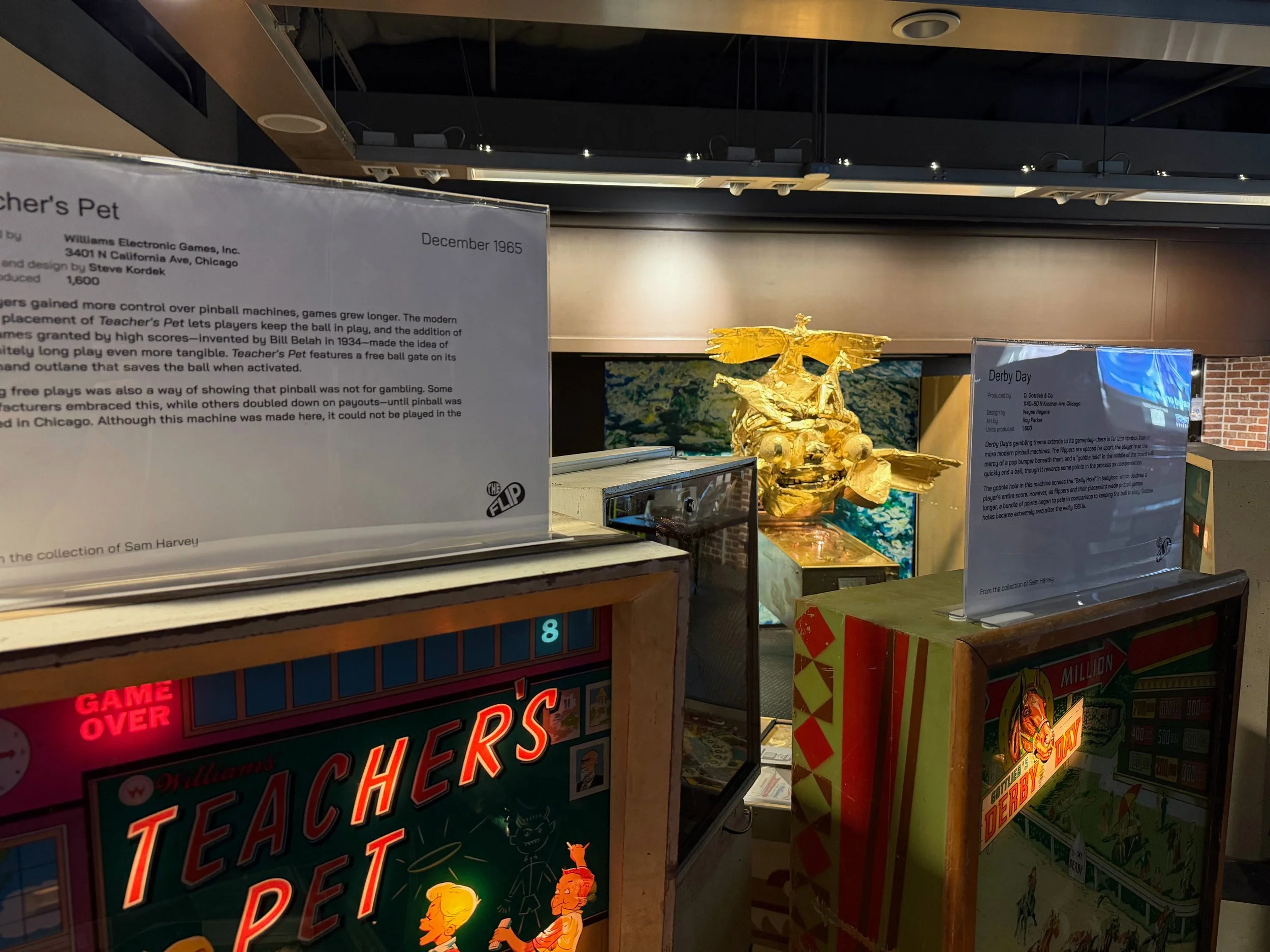
Push-on installed at The Flip in Block 37 next to Ed Pachke’s collaboration with Williams
A pinball machine and painting form one cohesive artwork in Push-On: The Prophets of the Extra Life. Alonso Galue's installation is a mythic landscape engaging a range of symbols from Andean and Amazonian civilizations like the Tairona and Timoto-Cuica. The playfield is engraved with clouds and features figures from including Yaku Mama, the serpent whose move-ment shaped the Amazon River, and the double- headed condor, which is a repeated symbol across Andean cultures. The artist's reimagination of a pre-Colombian Tairona sculpture tops the machine, creating what Galue calls a "pinball altar."
There is no scoreboard to serve as the player's guide to meaning. Push-On instead reveals and reflects on historical wrongs by redirecting pinball from its inherent focus on points and plenty. Galue's use of gold paint references European colonizers' fascination with precious metals—and their misunderstanding of those materials. Indigenous Andean sculptures were not made from pure gold, but tumbaga, a gold- colored alloy with only a small percentage of the precious metal. That did not stop Europeans' widespread destruction in pursuit of riches.
Williams's Spanish Eyes (November 1971) presented Galue with an opportunity to bring this history full circle. Much as images of Indigenous cultures were distorted to fit a Spanish cultural imagination, Spanish Eyes distorts Spain to fit a US cultural context. With the transformation of Spanish Eyes into part of Push-On, Galue reclaims cultural autonomy, notably using what he describes as "humble, recovered materials— cardboard, tape, rope, and wire-finished in a gold tone, much like the sacred objects the colonizers sought but destroyed in their greed."
The Flip.